Storm Damage5 min
5 signs your roof has hail damage
Hail damage is easy to miss from the ground and expensive to ignore. Here's what to look for after a storm — and what to do in the first 48 hours.
Sam Calloway
Founder & Master Roofer
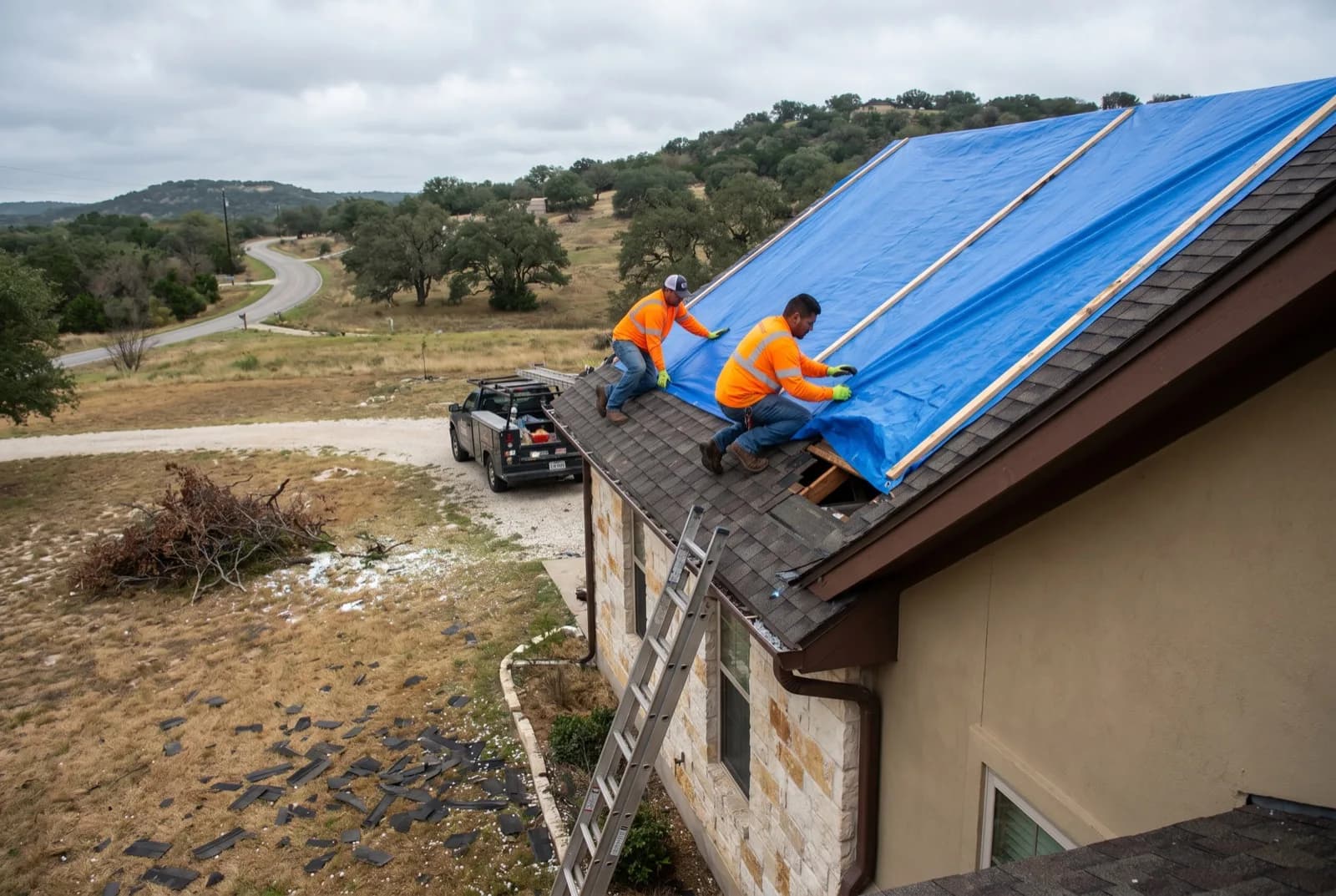
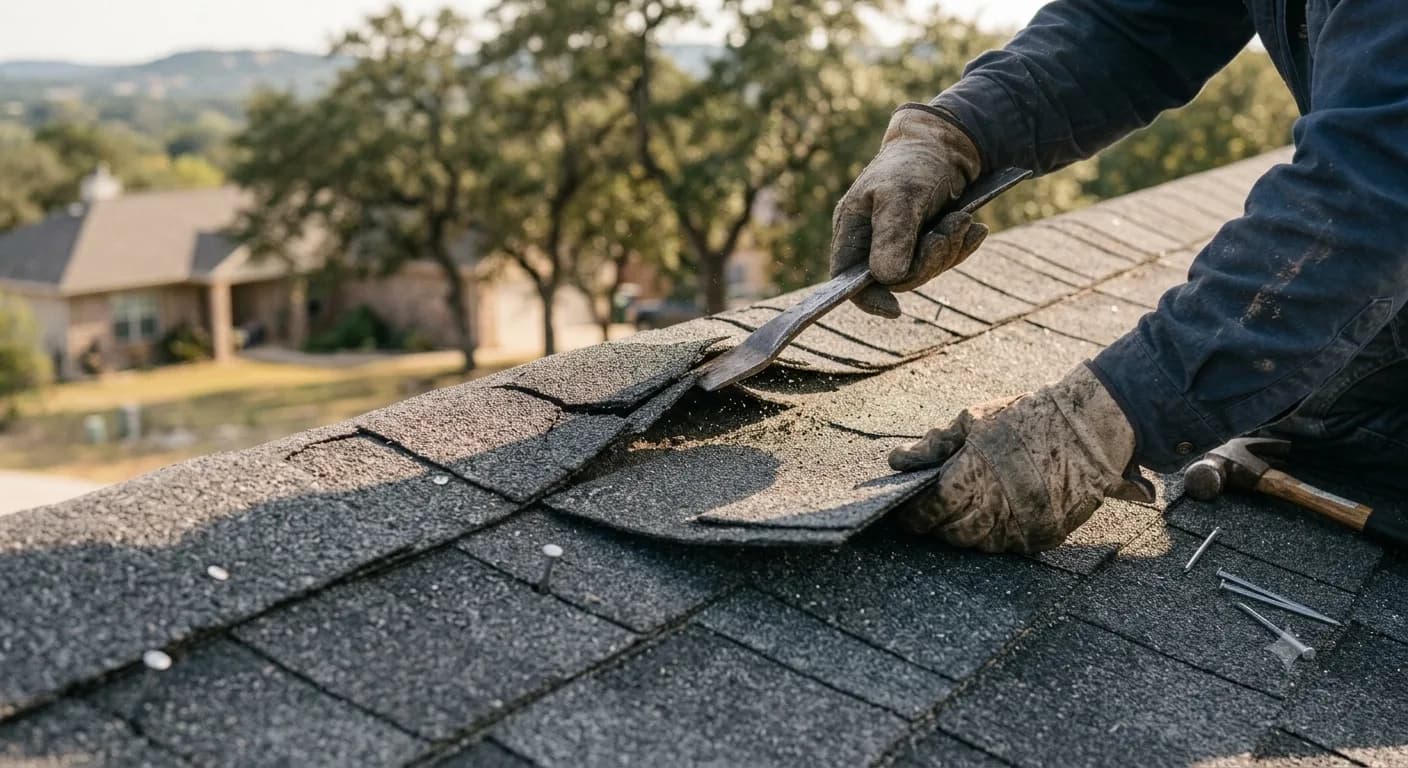
Why it's easy to miss — Hail rarely punches holes you can see from the driveway. It bruises shingles — knocking off the granules that protect the asphalt underneath. The roof looks fine for a season, then starts leaking the winter after everyone's forgotten the storm.
Sign one: granules in the gutters — After a hail storm, check your downspout splash blocks and gutters. A layer of black or gray grit that looks like coarse sand is your shingles' protective coat washing away. Some granule loss is normal on a new roof; piles of it after a storm are not.
Sign two: dents in the soft metals — Hail that's big enough to hurt your roof dents everything softer than the roof. Check your gutters, downspouts, mailbox, and AC fins for dents. Adjusters look here first, and so do we.
Sign three: dark spots on the shingles — From the ground, hail bruises read as dark, dull spots scattered randomly across the roof — different from the straight-line wear patterns of age. Binoculars work fine; you don't need to climb.
Sign four: cracked or lifted shingles — Wind usually rides along with hail. Shingles with lifted corners, creases across the middle, or missing tabs let water straight through the next rain.
Sign five: a ceiling stain weeks later — The most expensive sign, because it means water is already inside. If a stain shows up within a couple of months of a storm, the storm is the most likely cause — and it may still be claimable.
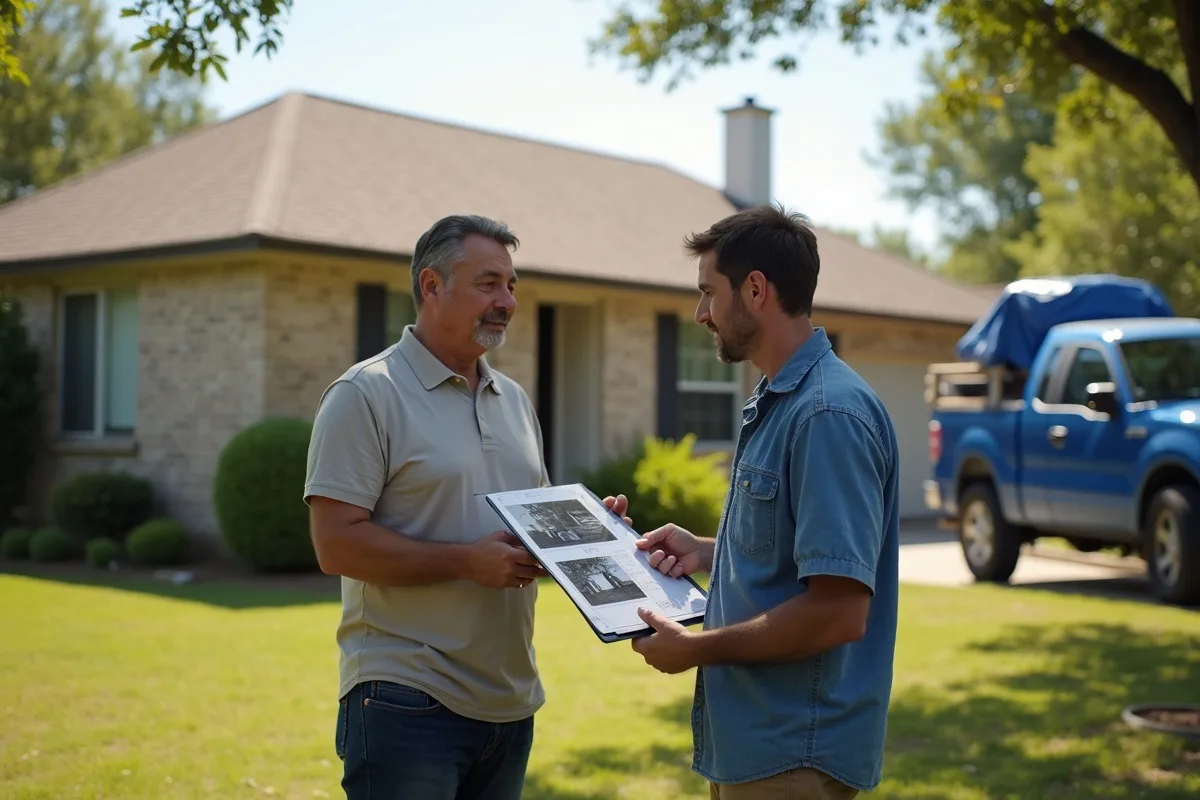
The first 48 hours — Don't sign anything with a door-knocker. Take photos of the hail on the ground next to something for scale — a coin, a tape measure. Then get a free inspection from a local, licensed roofer. The dated photo report is what your insurance claim will stand on.
What it costs to find out — Nothing. Our storm inspections are free, the report is yours to keep, and if there's no damage we'll tell you that too. Two out of three inspections end with "your roof is fine."